Cool Your Brain to Fight Insomnia and Fall Asleep Faster

To cool your brain and fall asleep faster, start by lowering your bedroom temperature to between 65-70°F. You can directly reduce brain temperature by applying a cool compress to your forehead or neck about an hour before bedtime. Take a cool shower 1-2 hours before sleep, and consider using cooling pillows or gel-infused mattress toppers to maintain the ideal temperature throughout the night. Drink cool water and avoid activities that raise your core temperature, like hot showers or heavy meals. These science-backed cooling techniques can help you drift off up to 10 minutes faster, and there's even more you can uncover about optimizing your sleep environment.
The Science Behind Brain Temperature
Your brain is like a busy computer that generates heat through constant neural activity. This heat production can make it challenging to drift off to sleep, as your brain needs to cool down before entering a restful state. Understanding brain temperature and its relationship to sleep is critical for addressing sleep problems.
When your brain temperature drops by just 1°C, you'll notice significant improvements in both sleep onset and sleep quality. This cooling process triggers important physiological changes - your cerebral blood flow slows down, and your metabolism decreases, naturally promoting relaxation. Your body's thermoregulation system plays a key role in this process, helping maintain the ideal temperature range of 36.5-37.5°C that's associated with healthy sleep patterns.
Various cooling techniques can help you achieve this temperature sweet spot. By targeting your head and neck area, you can activate your body's natural cooling mechanisms more effectively. This strategic approach to temperature management works with your brain's biology, rather than against it, creating perfect conditions for sleep. When you help your brain maintain its ideal temperature range, you're setting yourself up for better sleep quality and faster sleep onset.
Natural Brain Cooling Methods
Now that we comprehend how brain temperature impacts sleep, implementing natural cooling methods can make a significant difference in your bedtime routine. You'll find several effective techniques to naturally lower your brain temperature and promote faster sleep onset.
Start by adjusting your bedroom's ambient temperature to between 65-70°F, which triggers your brain's natural sleep-promoting mechanisms. Place a cool compress on your forehead or the back of your neck to directly reduce brain temperature. For additional cooling, try placing a gel pack or cooling pad on your pillow before bedtime.
You can also influence your body temperature through simple lifestyle adjustments. Drink a glass of cool water before bed to help lower your core temperature and increase sleepiness. Avoid activities that raise brain temperature close to bedtime, such as hot showers or consuming heavy meals. These can interfere with your brain's natural cooling process and make it harder to fall asleep.
Environmental Sleep Temperature Optimization
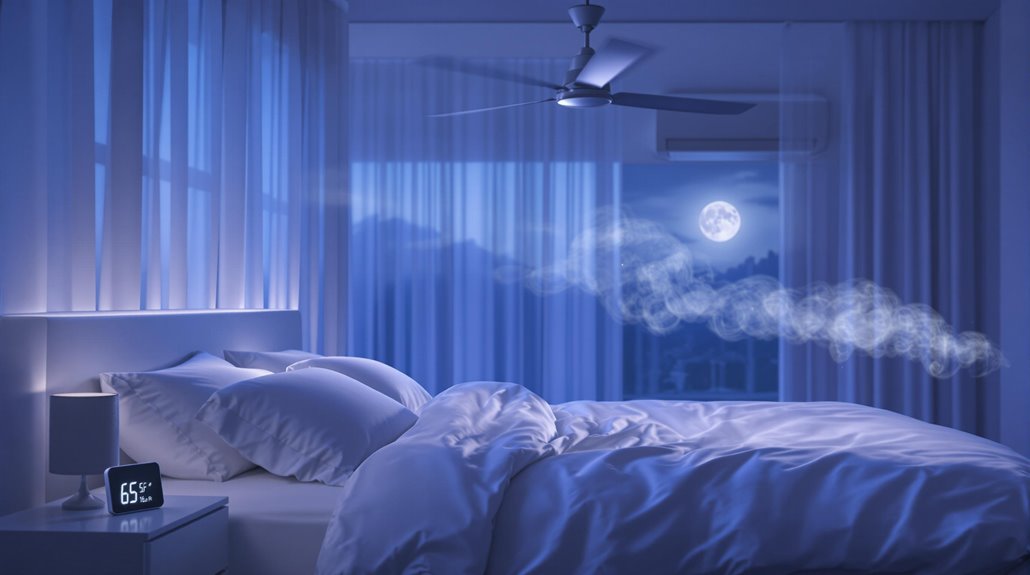
Through careful temperature control of your sleeping environment, you can substantially improve your sleep quality and reduce the time it takes to drift off. The ideal temperature range for perfect sleep lies between 65°F and 70°F, creating perfect conditions for your body to initiate sleep onset naturally.
You'll want to focus on managing your bedroom's ambient temperature using various cooling strategies. Start by utilizing fans, air conditioning, or opening windows to lower the room temperature before bedtime. This helps facilitate the natural decline in your core body temperature that signals your body it's time to sleep.
Consider upgrading your sleep environment with cooling accessories. A cooling mattress pad or gel-infused pillows can provide targeted temperature regulation throughout the night. When selecting bedding, opt for lightweight, breathable materials that prevent heat retention. Heavy blankets can trap warmth and interfere with your body's natural cooling process, so choose cooling bedding designed for temperature management.
Remember that exposure to warm temperatures before bed can disrupt your sleep cycle, so maintain consistent environmental cooling in the hours leading up to bedtime. This proactive approach to temperature management creates perfect conditions for restorative sleep.
Cold Therapy Before Bedtime
While many people focus on environmental cooling, targeted cold therapy before bedtime can markedly hasten your movement into sleep. When you're struggling with insomnia, lowering your body temperature through strategic cold therapy can trigger your natural sleep-wake cycle and amplify melatonin production. You'll find that proper sleep hygiene combined with temperature manipulation can significantly improve your ability to fall asleep.
- Take a cool shower 1-2 hours before bedtime to decrease sleep onset time by up to 10 minutes
- Apply an ice pack or cold compress to your forehead or neck to constrict blood vessels and encourage relaxation
- Use cooling pillows or specialized bedding that helps maintain ideal sleep temperatures
- Time your cold exposure properly to align with your body's natural temperature drop before sleep
These techniques work by enhancing your body's natural cooling process, which typically occurs as part of your sleep-wake cycle. When you deliberately lower your core temperature through cold therapy, you're essentially sending a biological signal that it's time to sleep, making it easier to drift off naturally.
Cooling Products and Technologies
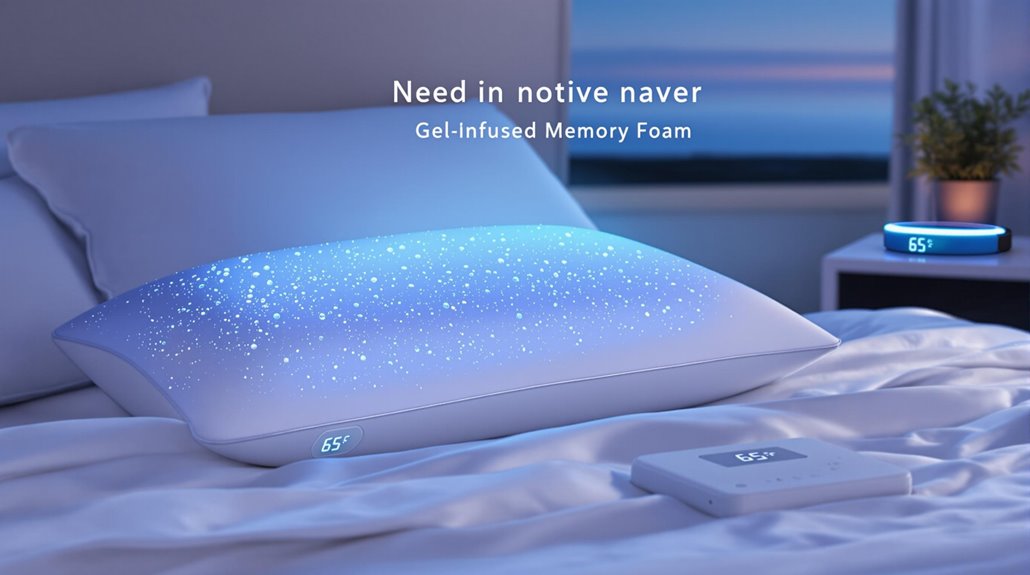
Modern cooling technologies have revolutionized how we combat sleep-related temperature issues. You'll find a wide range of cooling devices designed specifically to help you fall asleep faster and stay comfortable throughout the night. Cooling pillows and mattress toppers work together to lower your body temperature naturally, creating an ideal sleep environment.
For targeted relief, thermoelectric cooling devices use advanced technology with fans and heat sinks to actively cool your sleep surface. You can also try cooling caps and headbands, which directly lower brain temperature to improve your sleep quality. These innovative solutions have shown promising results for people struggling with sleep onset issues.
If you're looking for a more thorough solution, consider chilled water-circulating cooling mattress toppers. They provide consistent temperature control throughout the night. Another effective option is installing an evaporative cooling system in your bedroom, which uses water evaporation to reduce the ambient temperature. You'll notice the cooling technology works efficiently to maintain a comfortable sleeping environment. By incorporating these cooling devices into your sleep routine, you're taking advantage of scientifically-backed methods to combat insomnia and enhance your sleep quality.
Head and Neck Cooling Techniques
Simple head and neck cooling techniques offer practical alternatives to specialized cooling devices. By targeting these areas, you can effectively reduce your body temperature and trigger your body's natural thermoregulation process, helping you fall asleep faster. Research indicates that these cooling techniques can decrease sleep latency by approximately 13 minutes, making them helpful tools for managing insomnia.
You can implement these proven head and neck cooling methods to promote quicker sleep onset:
- Apply a cool, damp cloth to your forehead and neck area, which helps lower skin temperature and signals your brain that it's time to rest
- Wear a cooling headband or neck wrap filled with water or gel packs for sustained temperature reduction throughout the night
- Place an ice pack or frozen water bottle at the base of your neck to constrict blood vessels and reduce brain activity
- Combine different cooling techniques to maximize their effectiveness, such as using both a damp cloth and a cooling neck wrap
These methods work by decreasing local skin temperature, which triggers your body's natural cooling response and promotes drowsiness through reduced brain activity.
Lifestyle Changes for Temperature Regulation
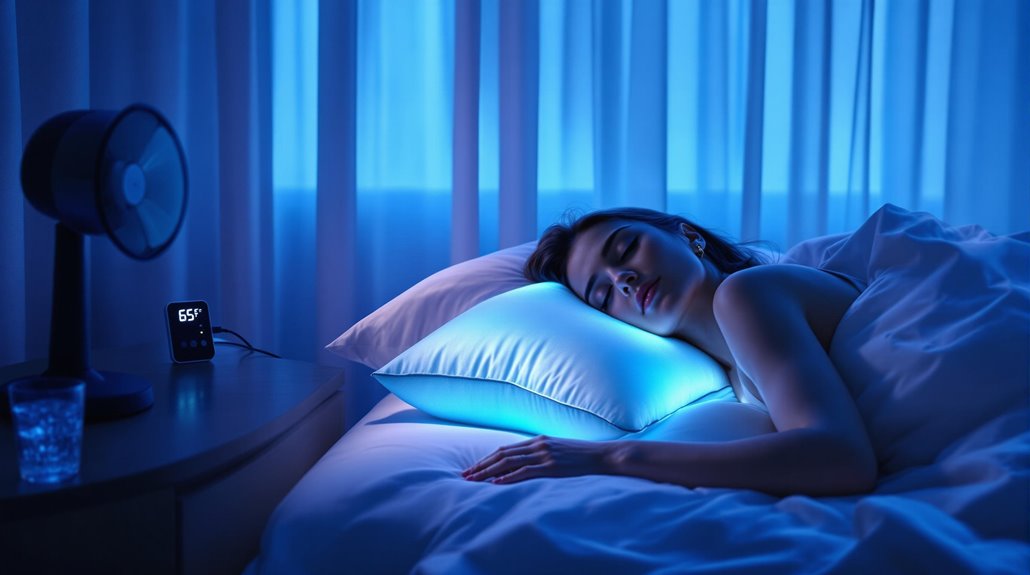
Creating an ideal sleep environment extends beyond temporary cooling solutions to include daily lifestyle adjustments that regulate your body temperature. To maximize your sleep quality, start by maintaining your bedroom temperature between 65°F and 70°F, which research shows is the best range for restful sleep.
Your daily light exposure plays a vital role in temperature regulation. You'll want to get plenty of bright light during daytime hours while avoiding intense lighting before bed. This helps sync your body's internal temperature clock and supports your natural sleep-wake cycle. When it's time to wind down, try taking a warm bath or shower about an hour before bedtime - this will trigger your body temperature to drop and promote drowsiness.
Don't overlook your sleep setup. Choose breathable, lightweight bedding that won't trap heat, and consider implementing cooling techniques like running a fan or using a cooling mattress pad. If you're struggling with insomnia, these temperature-regulating strategies can make a significant difference. By combining these lifestyle changes, you'll create an environment that supports your body's natural cooling process and helps you fall asleep faster.
Breathing Exercises for Temperature Control
Beyond adjusting your environment, commanding specific breathing exercises offers a direct way to cool your brain and body for better sleep. By practicing these techniques, you'll naturally lower your body temperature and heart rate, creating ideal conditions for relaxation and faster sleep onset.
- The 4-7-8 breathing method: Inhale for 4 seconds, hold for 7 seconds, and exhale for 8 seconds. This pattern creates a natural cooling effect throughout your body while calming your mind.
- Alternate nostril breathing: Block one nostril while inhaling, then switch nostrils for exhalation. This technique helps regulate your body's temperature and promotes balance in your nervous system.
- Paced respiration: Sync your breath with a metronome or breathing app to establish a steady rhythm that gradually lowers your core temperature and induces sleepiness.
- Simple breath counting: Practice inhaling for 4 counts and exhaling for 6 counts. This basic exercise helps distract your mind while naturally cooling your body, making it easier to drift off to sleep.