Blessed Rainy Day in Bhutan: A Festival of Renewal and Cleansing
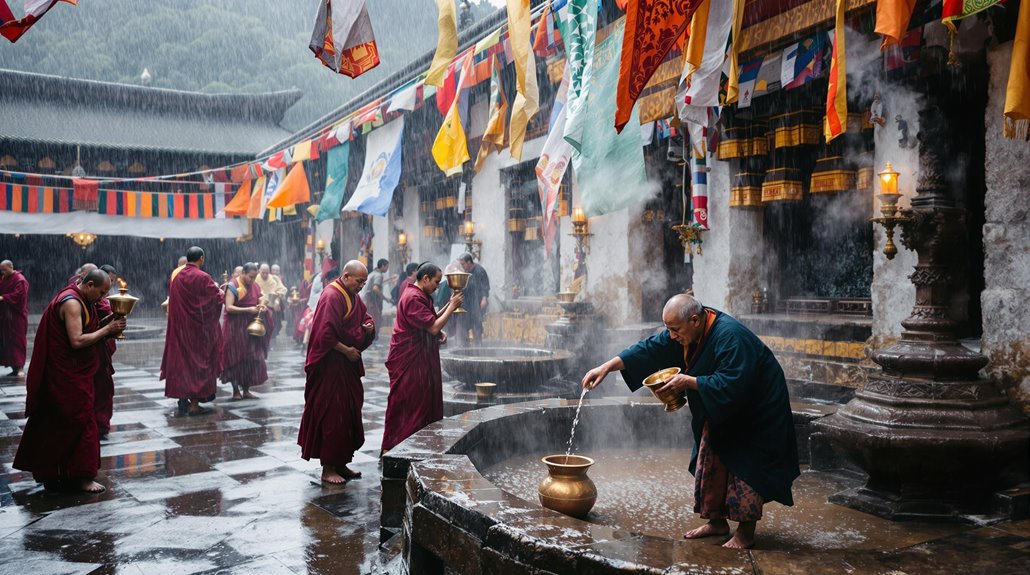
Bhutan's Blessed Rainy Day marks a sacred moment when you'll witness entire communities gathering before dawn for powerful cleansing rituals. As the monsoon season ends, you'll find families participating in sacred baths at precise astrological times, believing the water holds divine healing properties blessed by Buddha Vairocana. You'll see devotees offering prayers while washing away physical and spiritual impurities in this nationwide pause for renewal. The festival combines ancient celestial observations with cherished family traditions, as communities share warming thup porridge and celebrate together. The deeper spiritual essence of this centuries-old tradition reveals itself through its intricate layers of meaning.
Origins of Blessed Rainy Day
During ancient times in Bhutan, astrologers and Buddhist scholars established Blessed Rainy Day, or Trübap, as a sacred celebration marking the monsoon season's termination. You'll find that this festival's origins are deeply rooted in the celestial observations of Bhutanese astrologers, who carefully track the sun's movement into Virgo and its alignment with the star Rishi, also known as Canopus.
The festival's sacred foundation stems from Buddhist beliefs about Buddha Vairocana's divine influence. According to tradition, blessed nectar flows from his crown, infusing the rainy season's final showers with purifying and healing properties. You'll uncover that this divine connection transforms ordinary rainwater into a powerful agent of physical and spiritual cleansing.

The name Trübap itself reflects the Bhutanese people's profound reverence for this blessed rainy period. When you participate in this festival, you're taking part in a tradition that views water as more than just a natural element - it's considered a divine gift that cleanses both body and spirit, marking the transition between seasons while connecting the earthly domain with Buddhist cosmology.
Sacred Bathing Traditions
Building on these ancient spiritual foundations, the sacred bathing rituals of Blessed Rainy Day bring the festival's divine essence into tangible practice. You'll find Bhutanese families rising before dawn, making their way to nearby rivers, streams, and ponds for this cherished tradition. The timing isn't arbitrary - skilled astrologers determine the most auspicious moments based on celestial alignments, ensuring maximum spiritual benefit.
As you participate in these sacred bathing traditions, you're engaging in more than just a physical cleanse. According to Sowa Rigpa, the traditional Bhutanese medical system, these Rishi-touched waters carry special healing properties that purify your body and infuse it with energizing force. The sanctified rainwater is believed to hold transforming capabilities that cleanse not just your physical form, but your mind and soul as well.
The ritual extends beyond the water itself. You'll join other families in prayer and gratitude, sharing traditional meals that complement the day's purifying nature. These communal gatherings strengthen the spiritual significance of the sacred bathing traditions, creating a comprehensive experience of renewal and rejuvenation.
Prayers and Spiritual Significance

While raindrops descend on Bhutan's sacred terrain, devotees gather to offer heartfelt prayers that echo across valleys and mountaintops. During this cherished holiday, you'll witness prayers that honor the earth, skies, and all living beings, as communities unite in their quest for peace, wisdom, and universal compassion.
The monsoon season brings "Thrue Bab," a phenomenon Bhutanese people deeply revere as the descent of blessed water. You'll find that this spiritual occasion carries deep meaning, as the rainfall isn't merely seen as weather but as a divine force that sanctifies and purifies your body, mind, and soul. The ritual ceremonies you'll experience are designed to wash away your fears and anxieties, guiding you toward a path filled with love and harmony.
When you participate in the sacred bathing rituals, you're engaging in an act that's believed to cleanse both physical and spiritual impurities. The festival's deep-rooted spiritual significance alters a simple act of bathing into a powerful ceremony of renewal, where every droplet carries the potential for spiritual change and inner purification.
Family Gatherings and Celebrations
The joyous spirit of Blessed Rainy Day brings Bhutanese families together at dawn, starting with a warming bowl of thup porridge shared around the breakfast table. You'll find that these family gatherings mark a significant change in the Bhutanese calendar, celebrating both the end of farming season and the beginning of harvest time.
The festival's community-wide celebrations are made possible because institutions across Bhutan close their doors for the day. You'll notice how this nationwide pause allows families to fully immerse themselves in the festivities, maintaining cherished traditions that persist even when the holiday wasn't officially recognized.
Key elements of family celebrations include:
- Gathering before sunrise to participate in the ritual cleansing bath at the astrologically determined auspicious hour
- Sharing the traditional thup breakfast, strengthening family bonds through communal dining
- Joining community-wide celebrations that unite neighbors and friends
The enduring nature of these family gatherings speaks to their deep cultural significance, as Bhutanese citizens have historically chosen to observe the holiday regardless of its official status, preserving their cultural heritage through generations.
Astrological Timing and Beliefs

Astrological precision guides the timing of Blessed Rainy Day, as the festival marks the sun's entry into Virgo and its alignment with Rishi, the star Canopus. You'll find that Bhutanese astrologers carefully calculate the exact moment when this celestial event occurs, determining the most auspicious hour for the festival's purification rituals as the monsoon season draws to a close.
Rishi holds special significance in both astronomical and spiritual contexts. You'll uncover that this star is believed to possess the power to bless water and generate rainfall, while its crystalline rays are thought to purify water with healing properties. The connection grows even deeper through Buddhist traditions, where Rishi is associated with Buddha Vairocana's crown. You'll learn that when Rishi shines, it's believed that divine nectar flows from the Buddha, blessing the waters below.
This intricate blend of astrological timing and spiritual beliefs creates an elaborate framework for the festival's cleansing rituals. When you participate in these sacred bathing ceremonies, you're engaging in practices that have been carefully timed to harness the maximum spiritual and purifying benefits of this celestial alignment.
Related posts