Beer Day: Celebrating a Universal Beverage
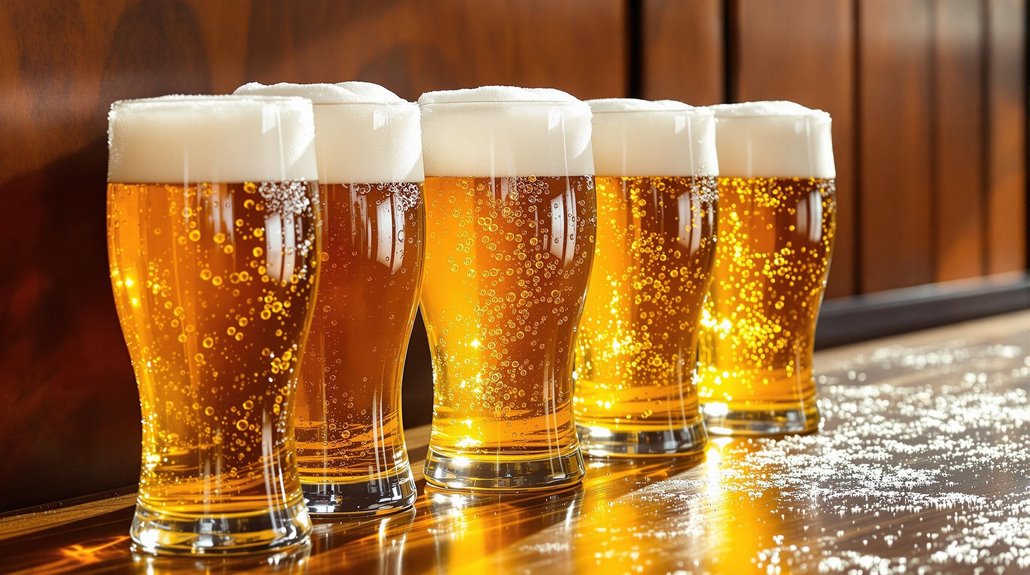
International Beer Day, celebrated on the first Friday in August, invites you to join a global celebration that's grown from a casual California bar gathering into a worldwide phenomenon. You'll find festivities in over 200 countries, uniting craft beer enthusiasts and casual drinkers alike in appreciation of this ancient beverage. From its origins in Mesopotamia to today's craft brewing revolution, beer has shaped human culture, social connections, and technological advancement. Whether you're sampling a local IPA or exploring international brews, you're participating in a tradition that spans thousands of years. There's much more brewing in beer's fascinating story.
The Birth of Beer Day
Beer enthusiasts worldwide might be surprised to learn that International Beer Day started as a simple bar gathering in California back in 2007. What began as a casual celebration among friends at a local bar has evolved into a global phenomenon that's now observed in more than 200 countries and territories around the world.
You'll find it interesting that the founders chose the first Friday in August without any particular historical significance. This timing, however, has proven perfect as it falls during the "dog days of summer" when people are naturally drawn to cold, invigorating beverages. Since its official launch in 2008, the celebration has united craft beer lovers and casual drinkers alike in appreciation of this timeless beverage.
The conversion from a local bar event to an international celebration showcases how shared appreciation for beer transcends borders and cultures. Whether you're enjoying a craft beer at your neighborhood pub or raising a toast with friends across continents, you're now part of a tradition that started with a group of friends who simply wanted to celebrate their favorite drink.
Global Beer Traditions
Throughout human civilization, three exceptional cultures - Mesopotamia, Egypt, and China - laid the foundation for what would become a global brewing legacy. As one of the world's oldest fermented beverages, beer has transitioned from a local craft into an international phenomenon that shapes cultural celebrations worldwide.
You'll find that today's beer industry reflects this rich heritage, with countries like China, the United States, and Germany leading production while maintaining their distinct brewing traditions. The variety you'll encounter spans from crisp German lagers to hoppy American IPAs, each telling its own story of regional innovation and cultural preference.
When you participate in global celebrations like Oktoberfest, you're joining a tradition that connects you to thousands of years of brewing history. These festivals aren't just about enjoying beer; they're about honoring the craftsmanship that's been passed down through generations. With over 200 million hectoliters produced annually, you're part of a worldwide community that continues to adopt and evolve this ancient beverage. From Brazil's emerging craft scene to Mexico's long-standing brewing heritage, you'll uncover that beer remains a universal language that bridges cultures and traditions.
Crafting the Perfect Brew
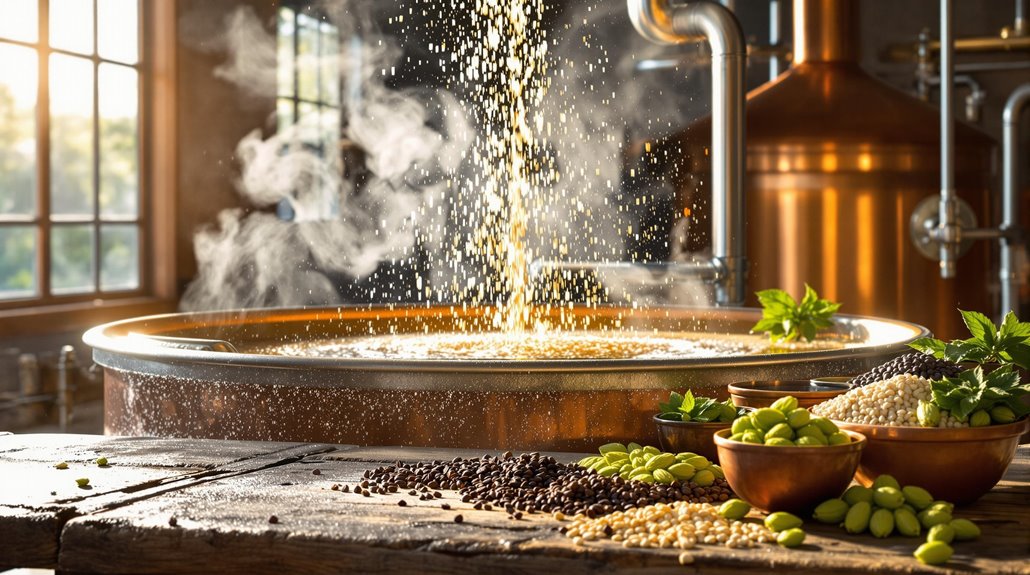
Behind every great beer lies a painstaking process that converts simple ingredients into liquid gold. As you journey through the world of brewing, you'll uncover how malting awakens the grain's potential, while mashing extracts its fermentable sugars. The careful boiling with hops adds those distinctive bitter notes and preservative qualities you've come to love in your favorite brews.
The true magic happens during fermenting and conditioning, where temperature control and timing transform sweet wort into a complex, balanced beverage. You'll find that craft brewers are constantly pushing boundaries, experimenting with new ingredients and techniques to create unique flavor profiles that challenge traditional beer styles.
Precise temperature control throughout each brewing stage, a careful selection of quality ingredients, from malts to yeast strains, and proper carbonation and serving methods that showcase the beer's character are what make a brew truly exceptional.
Whether you're sipping a traditional lager or an experimental craft ale, you're tasting the results of a brewer's skill in balancing science and artistry. Every step in the process contributes to the final product's aroma, color, and taste profile.
Beer's Ancient Origins
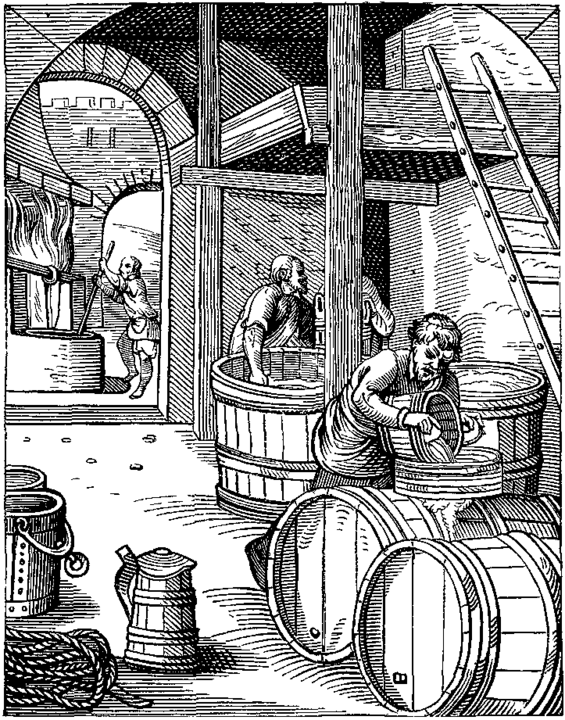
Deep within humanity's earliest civilizations, you'll find the story of beer's extraordinary beginnings. Dating back to around 9500 BC, beer emerged alongside humanity's first attempts at cereal farming, marking a pivotal moment in agricultural history. You can trace this beloved beverage's roots to the cradles of ancient civilization - Iraq and Egypt - where archaeological evidence reveals sophisticated brewing practices.
In Egypt, researchers have uncovered what they believe to be the world's oldest large-scale brewery, demonstrating that ancient civilizations weren't just making beer casually - they were producing it on an industrial scale. You'll be fascinated to learn that beer played a role far beyond mere refreshment in these societies. Ancient peoples incorporated it into their sacrificial rites, making it an integral part of their religious and cultural practices.
When you study beer's ancient origins, you're not just learning about a beverage - you're uncovering fundamental insights into early human history. The story of beer's evolution from prehistoric times tells you about technological advancement, social development, and cultural practices that have shaped human civilization for thousands of years.
From Prohibition to Celebration
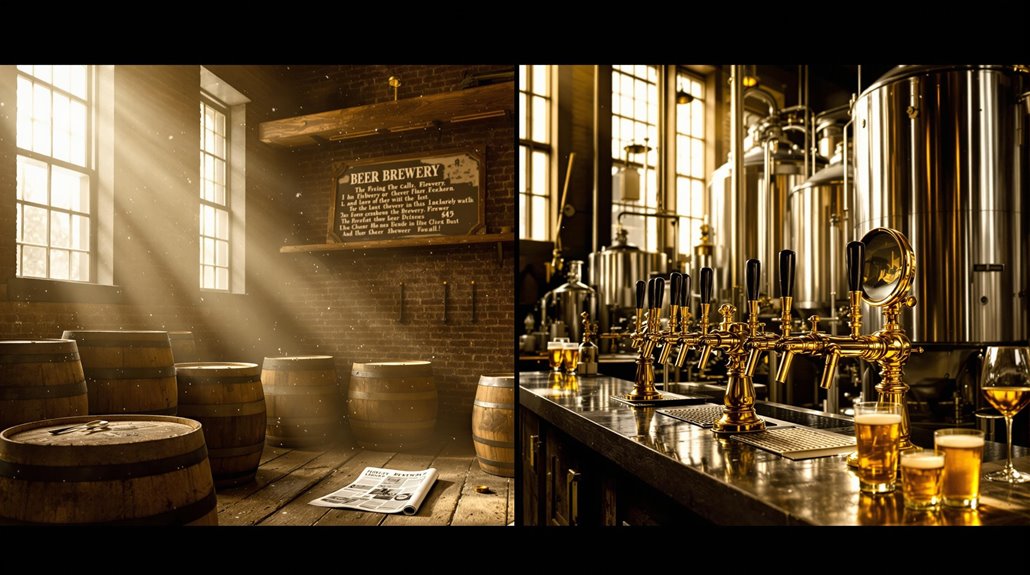
A watershed moment in American beer history arrived with the end of Prohibition in 1933. The Cullen-Harrison Act paved the way for beer's triumphant return, allowing the sale of brews with up to 3.2% alcohol content. You'll find that this pivotal legislation sparked the very first "New Beer's Eve" celebration on April 6th, leading to what we now know as National Beer Day on April 7th.
Around the country, Americans continue to commemorate this historic transition from the dry days of Prohibition to the renewed freedom to enjoy their favorite brews. You can join in the festivities every first Friday of April, as communities gather to celebrate this significant milestone in American cultural history.
Here's what made this transformation so impactful:
- The Cullen-Harrison Act marked the first legal beer sales after 13 years of Prohibition
- "New Beer's Eve" became an impromptu celebration as Americans eagerly awaited legal beer
- National Beer Day emerged as an annual tradition, symbolizing freedom of choice and cultural heritage
This shift from Prohibition to celebration represents more than just the return of a beverage – it's a document to America's evolving relationship with beer and its enduring cultural significance.
Modern Brewing Innovation
Through modern innovation, today's brewing terrain bears little resemblance to its historical roots. As you celebrate International Beer Day, you'll find yourself taking place in a revolution that's transformed the humble fermented beverage into an art form. Today's craft brewers aren't just making beer; they're pushing boundaries with experimental ingredients and novel techniques that would amaze their predecessors.
You'll uncover how science and technology have enabled brewers to create complex flavor profiles that weren't possible just decades ago. Whether you're sharing an innovative IPA with Loved Ones or exploring the tangy depths of a barrel-aged sour, you're experiencing the results of collaborative efforts between brewers, scientists, and technology experts. Beer lovers worldwide are now witnessing an unparalleled era where sustainability meets creativity - brewers are adopting eco-friendly practices while crafting trailblazing beverages. As you raise a toast to your favorite brew, you're participating in a movement that combines traditional craftsmanship with modern innovation. From upcycled brewing byproducts to renewable energy utilization, today's brewing industry is leading the charge in both flavor exploration and environmental responsibility.
Beer Styles Around the World
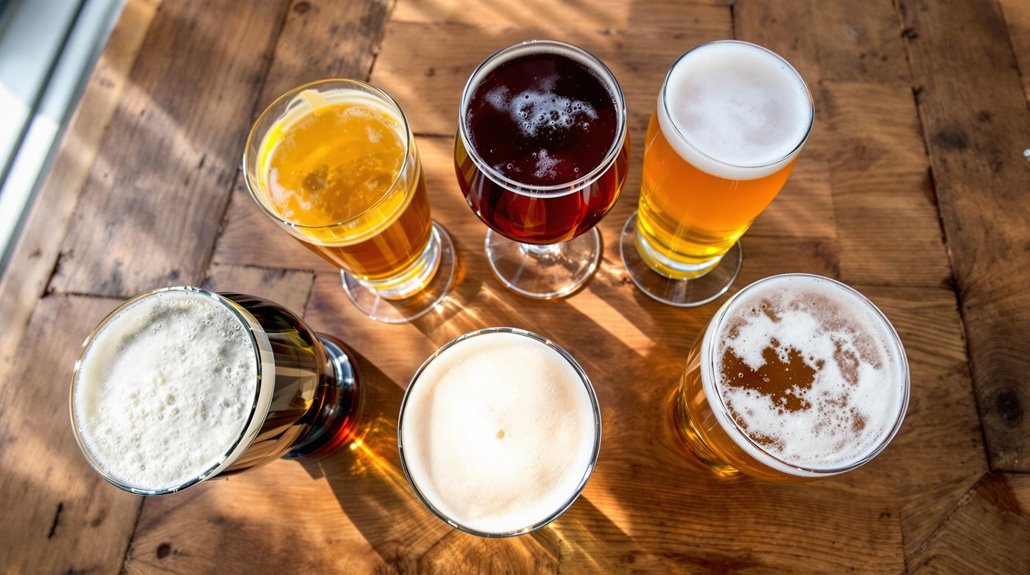
Rich tapestries of flavor and tradition shape the world's diverse beer panorama, where distinctive brewing styles tell stories of cultural heritage and regional innovation. You'll plunge into a remarkable range of beer styles, each offering unique characteristics that cater to different palates and preferences.
Whether you're exploring the crisp, clean profiles of lagers or delving into the complex, malty world of ales, you're experiencing centuries of brewing expertise. The contrast between these styles showcases brewing's versatility, from the dark, roasted notes of stouts to the bold, hop-forward character of IPAs. Wheat beers stand out with their cloudy appearance and refreshing, fruity undertones, adding another dimension to the global beer landscape.
- Savoring a classic lager's clean finish and subtle complexity
- Exploring an IPA's bold hop aromatics and satisfying bitterness
- Indulging in a stout's rich, creamy texture and roasted malt depth
These varied styles reflect how brewers worldwide have honed their craft, creating a diverse array of options that continue to evolve and delight beer enthusiasts everywhere.
Sustainable Brewing Practices
Modern brewing pioneers are revolutionizing beer production through innovative sustainable practices, with projects like CHEERS leading the charge. You'll find that today's breweries are embracing waste valorization strategies, transforming brewing by-products into precious bio-products through advanced biorefinery approaches.
When you look at initiatives like the CHEERS EU project, you're seeing a perfect example of how the industry is changing. They're taking what was once considered waste and converting it into useful products, demonstrating that sustainability and tradition can work hand in hand. The project's impact extends beyond the brewery walls, contributing to biodiversity and promoting sustainable agricultural practices.
You'll notice these changes particularly on International Beer Day, where breweries showcase their commitment to environmental stewardship. Through public engagement and education, you're learning how the beer industry is reducing its environmental footprint while maintaining the quality you expect. The CHEERS project exemplifies how modern brewing can champion sustainability without compromising tradition, showing that your favorite beverage can be both delicious and environmentally responsible.
The Art of Beer Tasting
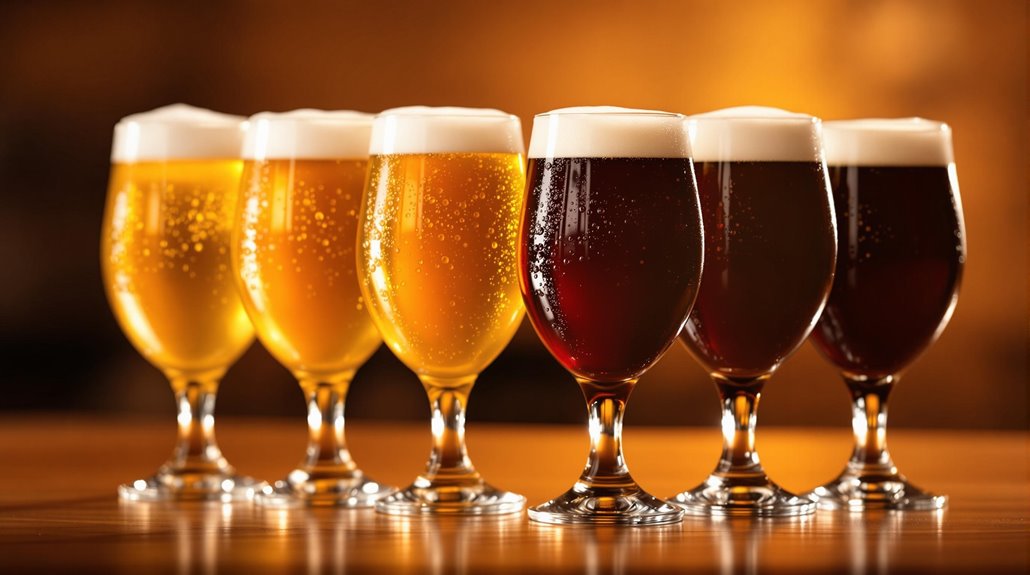
Beyond the craft of brewing lies the sophisticated art of beer tasting, where enthusiasts learn to detect and appreciate subtle flavor subtleties. When you're exploring beer tasting techniques, you'll uncover it's not just about drinking - it's about engaging all your senses to fully experience each brew's unique characteristics.
To develop your beer tasting skills, you'll need to understand the fundamental elements that create each beer's distinct profile. Pay attention to how different ingredients, from hops to malt, contribute to the overall flavor composition. You'll find that proper temperature and glassware play pivotal roles in revealing a beer's true character.
Essential steps for proper beer tasting:
- Examine the beer's appearance, noting its color, clarity, and head retention
- Take time to smell the aromatics, identifying notes like citrus, pine, or roasted malts
- Taste thoughtfully, letting the beer coat your palate while considering its flavor profile and mouthfeel
As you practice these tasting techniques, you'll develop a more refined palate and expand your beer vocabulary, enabling you to better describe and appreciate the intricacies of different beer styles.
Beer's Cultural Impact
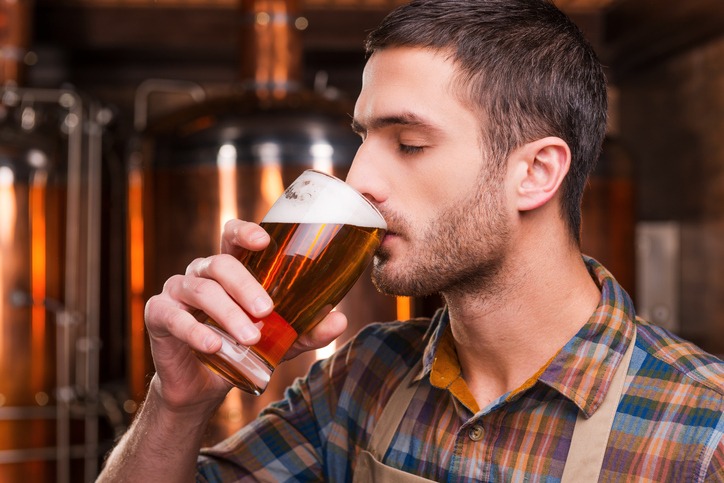
While becoming an expert in beer tasting augments personal appreciation, beer's influence extends far deeper into the fabric of human society. From ancient Mesopotamian rituals to modern-day pub gatherings, beer's social impact has shaped human connections and cultural traditions for thousands of years.
You'll find beer's cultural significance woven throughout history, where it served as more than just a beverage. In ancient civilizations, it played a pivotal role in religious ceremonies, offered to deities as a sacred libation. Today, you can experience this cultural legacy in various forms, from the vibrant atmosphere of British pubs to the festive spirit of Germany's Oktoberfest.
The craft beer movement has further amplified beer's cultural impact, transforming local communities into hubs of creativity and social interaction. When you visit a modern brewery or beer festival, you're participating in a tradition that spans millennia. These gatherings continue to foster meaningful connections, just as they did in ancient times. Beer remains a catalyst for community building, helping forge relationships and create shared experiences that transcend geographical and cultural boundaries.
Celebrating Beer Responsibly
Enjoying beer to its fullest means embracing responsible consumption habits. When you're celebrating Beer Day or attending festivals, it is crucial to follow responsible sampling guidelines that enhance your experience while keeping you safe. You'll want to stick to recommended daily limits - one drink for women and two for men - and always stay hydrated by alternating between beer and water.
Whether you're at a bar or beer festival, you can make smart choices that let you savor every sip. Consider exploring non-alcoholic alternatives or lower-alcohol options that deliver great taste without heavy effects. Remember that bartenders and servers are your allies in responsible drinking, so don't hesitate to ask for guidance or information.
- Plan your transportation ahead - designate a driver or use ride-sharing services
- Pace yourself by eating food and drinking water between samples
- Track your consumption and know when to stop - listen to your body's signals
Supporting Local Breweries
Supporting your local breweries represents one of the most impactful ways to celebrate Beer Day year-round. When you choose to purchase from neighborhood breweries, you're not just buying beer - you're investing in your community's economic growth and helping create jobs close to home. Local breweries often prioritize sustainability by sourcing ingredients from nearby farms, which reduces transportation emissions and supports regional agriculture.
Community engagement flourishes at local breweries, where you'll find passionate brewmasters enthusiastic to impart their knowledge about beer-making processes. You'll investigate how different ingredients and techniques combine to create unique flavors, and you might even get to peek behind the scenes of the brewing operation. The craft beer scene offers an exhilarating opportunity to examine distinctive, small-batch brews you won't find anywhere else.