Bean Throwing Day: A Unique Japanese Tradition
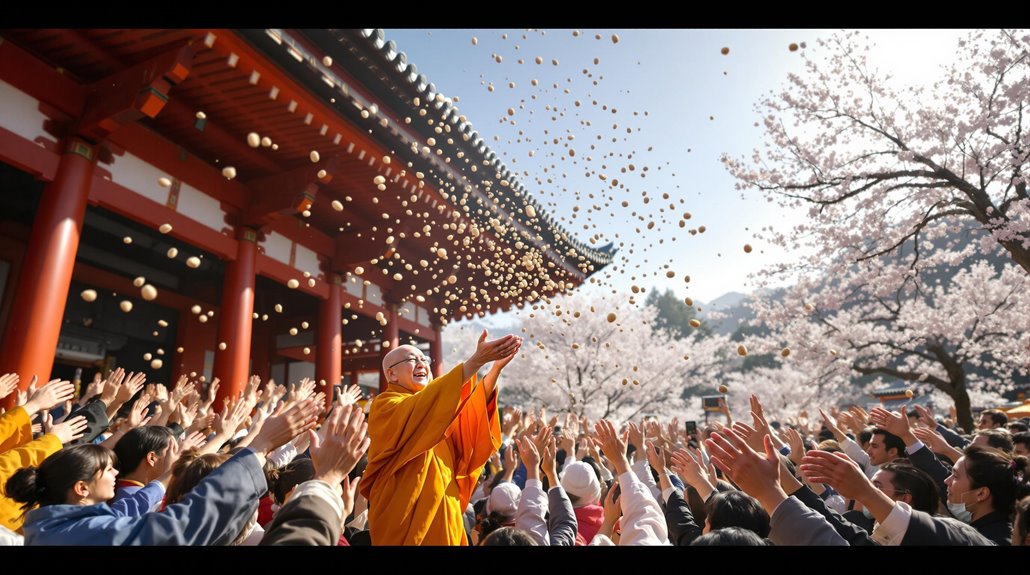
You'll find Bean Throwing Day (Setsubun) celebrated across Japan each February 3rd, marking the seasonal change from winter to spring. During this lively festival, people throw roasted soybeans while shouting "Oni wa soto, fuku wa uchi" - meaning "demons out, luck in." This tradition dates back to 8th century China and has evolved into a beloved Japanese custom. Today, you'll see both intimate household ceremonies and grand public events at shrines and temples, where celebrities and officials often lead the bean-throwing festivities. From regional variations to modern adaptations, there's much more to uncover about this fascinating ritual.
Origins of Bean Throwing Customs
Many centuries ago, Japan's beloved bean throwing tradition emerged from the Chinese practice of tsuina, making its way to Japanese shores in the 8th century. During this early period, you'd have seen palace gates adorned with clay figures while peach branches and walking sticks were used to ward off evil spirits at the end of the lunar-solar calendar year.
As time progressed into the Muromachi period, the practice evolved into what you'll recognize today as mamemaki during the Setsubun Festival. The bean throwing ritual became a household tradition, with the responsibility typically falling to the male head of the family born in that year's zodiac sign. You'll find it interesting that some families with the Watanabe surname don't participate in this custom, thanks to a legendary tale about their ancestor, Watanabe no Tsuna, who successfully defeated an oni.
The ritual's deeper meaning centers on the symbolic act of purifying the home. When you throw the beans, you're participating in an age-old practice meant to drive away evil spirits, connecting modern celebrations to ancient beliefs that have shaped Japanese culture for centuries.
Seasonal Rituals and Celebrations
The lively celebration of Setsubun on February 3rd marks a pivotal seasonal change in Japan, signaling winter's end and spring's arrival according to the lunar calendar. During this Japanese holiday, you'll witness families enthusiastically participating in mamemaki, the traditional bean-throwing ritual. As they toss roasted soybeans, you'll hear them shout "Oni wa Soto" (demons out) and "Fuku wa Uchi" (good luck in), creating an atmosphere of renewed hope and cleansing.
To maximize your good luck during Setsubun, you'll want to eat roasted soybeans - the number should match your age plus one. You'll also find families hanging hiiragi iwashi at their entrances and enjoying ehōmaki, special uncut sushi rolls eaten while facing that year's lucky compass direction. This directional eating ritual showcases how deeply ingrained these customs are in Japanese culture.
As the year progresses, you'll see communities coming together to perform these time-honored traditions. From local temples to family homes, the festivities blend ancient folklore with modern celebrations, making Setsubun a cherished marker of seasonal change in Japanese society.
Regional Bean Throwing Variations
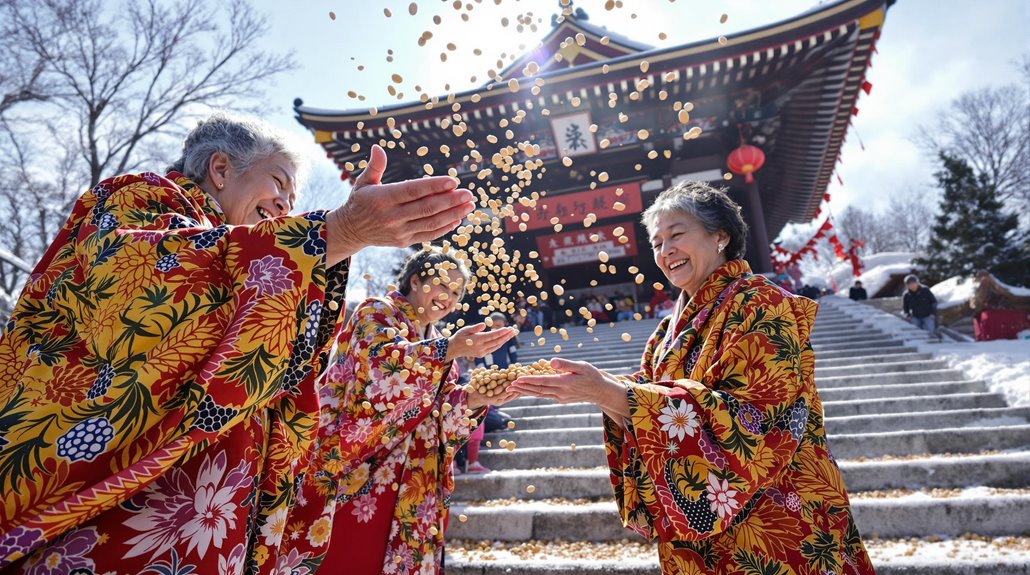
Regional customs shape how different parts of Japan celebrate Setsubun's bean-tossing rituals. In the Tōhoku region, you'll find a distinct practice where the household head takes charge of the ceremony, first praying at the family shrine before hurling sanctified roasted beans outside. If you're in Aizuwakamatsu, you'll hear a unique chant of "Oni no medema buttsubuse!" meaning "Blind the demons' eyes!" - a variation that sets it apart from other regions' traditional phrases.
The Kansai region brings its own flavor to the lunar calendar celebration with the ehō-maki tradition. You'll need to eat these uncut sushi rolls in complete silence while facing the year's lucky direction. This custom has gained such popularity that you can now find ehō-maki throughout Japan, thanks to widespread marketing by convenience stores and supermarkets.
Some areas offer an interesting twist on the traditional bean tossing by using peanuts instead of soybeans. Whether you're enjoying them raw or sweetly coated, this alternative maintains the spirit of the celebration while adding regional diversity to this cherished custom.
Modern Festival Practices
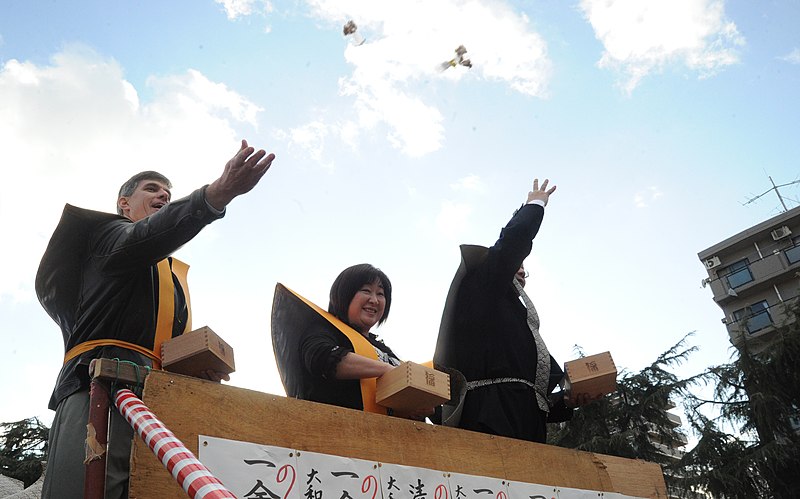
While ancient traditions remain at its core, modern Setsubun celebrations have evolved into large-scale public events that draw thousands to Japan's prominent shrines and temples. You'll find celebrities and local officials launching the festivities by leading the traditional bean scattering, or mamemaki, symbolizing the end of winter and welcoming of spring. It's not just about throwing beans anymore - the celebration has become commercialized with stores offering special Setsubun-themed products to help you celebrate the new year with good fortune.
You'll encounter these festive scenes across Japan:
- Crowds gathering at temples, catching roasted soybeans tossed by popular personalities wearing traditional costumes
- Office workers participating in workplace mamemaki ceremonies, complete with demon masks and lucky sushi rolls
- School children enthusiastically throwing beans in classroom celebrations while learning about this cultural tradition
The celebration has seamlessly integrated into modern Japanese life, with convenience stores and supermarkets stocking pre-packaged roasted soybeans and Setsubun-specific items. Whether you're attending a grand temple ceremony or participating in a small office gathering, you'll find that Setsubun's spirit of welcoming spring remains lively in contemporary Japan.
Cultural Significance Through Time
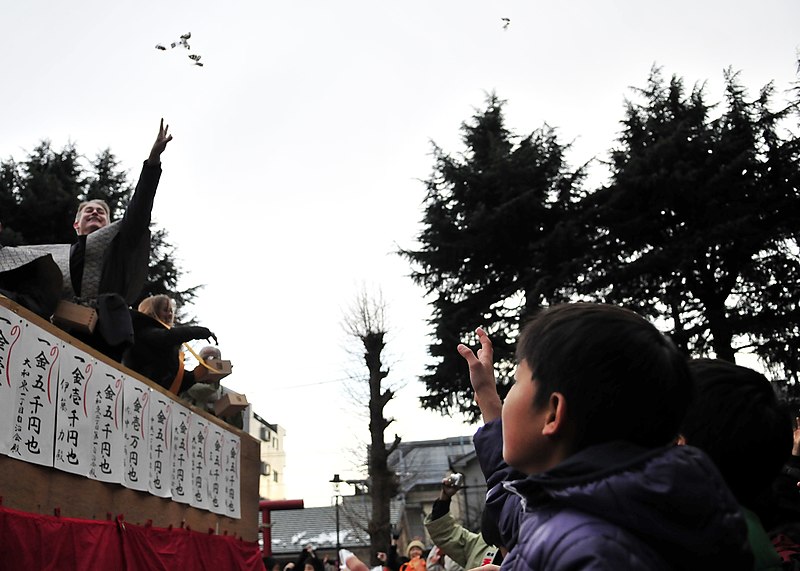
Spanning across thirteen centuries, Setsubun's cultural significance has evolved from its origins as a Chinese-inspired tsuina ritual to become a deeply embedded Japanese tradition. You'll find the earliest documented instances of mamemaki dating back to the 8th century, when Japanese culture first adapted the practice of throwing beans to ward off evil spirits.
By the time the Gyōyo recorded these customs in the 15th century, mamemaki had already become an integral part of Japan's spiritual realm. The practice gained particular prominence during the Edo and Meiji periods, when you'd see elaborate celebrations in geisha districts throughout the country. This period marked a significant conversion in how Japanese society viewed the relationship between the physical and spirit worlds, especially during the new year conversion.
You'll notice how the tradition has adapted to local preferences over time, with regional variations emerging across Japan. In Tōhoku, for example, you might find people throwing peanuts instead of the traditional soybeans. These adaptations demonstrate how Setsubun rituals have remained relevant while accommodating local customs and preferences throughout Japanese history.