
Bad Habits That Can Lead to Poor Sleep Quality

Your daily habits could be sabotaging your sleep quality without you realizing it. Late-night screen time disrupts your melatonin production, while irregular sleep schedules throw off your body's natural rhythms. Heavy meals before bed make it harder to rest comfortably, and using your bedroom for activities other than sleep sends mixed signals to your brain. Even that evening cup of coffee or tea can interfere with your ability to fall and stay asleep. Understanding these common sleep-disrupting behaviors is your first step toward achieving the restful night's sleep you deserve.
Late Night Screen Time
While many people consider scrolling through their phones a relaxing bedtime ritual, late-night screen time can seriously disrupt your ability to get quality sleep. When you expose yourself to electronic devices before bed, you're actually working against your body's natural sleep mechanisms. The blue light emitted from your phone, tablet, or computer screen signals your brain to stay alert, effectively suppressing the production of melatonin - the hormone that helps regulate your sleep cycle.
Your nighttime social media browsing, email checking, and news reading might seem harmless, but these activities stimulate your brain when it should be winding down. This mental engagement makes it extremely harder to fall asleep once you finally put your device away. To protect your sleep quality, you'll need to establish a device-free buffer zone of at least 30 minutes before bedtime. If you continue exposing yourself to screens right before bed, you're likely to experience poor sleep quality, feel tired throughout the next day, and potentially develop sleep disorders like insomnia. Breaking this habit is essential for maintaining healthy sleep patterns and overall well-being.
Inconsistent Sleep Schedule
According to sleep experts, maintaining a consistent sleep schedule is just as crucial as getting enough hours of sleep. When you vary your bedtime and wake-up times, you're disrupting your body's natural circadian rhythms, making it increasingly difficult to get a good night's sleep. An inconsistent sleep schedule throws off your internal clock, leading to problems falling asleep, staying asleep, and waking up feeling refreshed.
Your body thrives on routine, and irregular sleep patterns can significantly impact your sleep quality. This includes taking naps at different times throughout the day, which can further disrupt your natural sleep-wake cycle and make it harder to fall asleep at night. Without a consistent bedtime routine and proper wind-down period, you're making it more challenging for your body to transition into sleep mode.
To help maintain a consistent sleep schedule:
- Set fixed bedtime and wake-up times, even on weekends
- Create a calming bedtime routine that starts at the same time each night
- Schedule any necessary naps for the same time each day
- Allow yourself 15-30 minutes of wind-down time before bed
Pre-Bedtime Heavy Meals

Late-night feasts can wreak havoc on your sleep quality. When you indulge in a large meal shortly before bedtime, your body has to work overtime on digestion instead of preparing for rest. This disruption can considerably impact your ability to achieve good sleep, leaving you tossing and turning throughout the night.
Your digestive system faces particular challenges when processing heavy foods close to bedtime. You're more likely to experience uncomfortable acid reflux and heartburn when lying down with a full stomach, which can force you to stay awake or wake up frequently during the night. The calories from a substantial evening meal can also interfere with your body's natural sleep-wake cycle, making it harder to fall asleep and maintain restful slumber.
To protect your sleep quality, you'll want to avoid consuming heavy, rich foods in the hours leading up to bedtime. Instead, if you're hungry, opt for a lighter snack that won't overwhelm your digestive system. This simple change in your eating habits can make a significant difference in how well you sleep and how refreshed you feel the next morning.
Bedroom Multi-Tasking
Your bedroom should serve as a sanctuary for sleep, but many people convert it into a makeshift office, entertainment center, or social hub. Using your bedroom as a multipurpose space can seriously disrupt your sleep patterns and make it difficult for your brain to associate the room with rest. When you bring work materials, electronics, and other distracting items into your sleep space, you're sending mixed signals to your mind about the room's purpose.
To create a sleep-conducive environment and improve your rest quality, consider these essential changes:
- Remove all work-related items from your bedroom, including laptops, paperwork, and office supplies
- Keep electronics like TVs, tablets, and gaming consoles in other rooms of your home
- Designate alternative spaces for socializing and entertainment activities
- Reserve your bedroom exclusively for sleep and intimate activities
Evening Caffeine Consumption

The consumption of caffeine in the evening hours can throw your entire sleep schedule into disarray. If you're drinking coffee, tea, or energy drinks close to bedtime, you're likely compromising your sleep quality without realizing it. Research clearly shows that consuming caffeine within six hours of going to bed markedly disrupts both the duration and quality of your rest.
What makes this habit particularly challenging is that caffeine lurks in many unexpected places. While you might be mindful of avoiding your evening coffee, you could be consuming caffeine through chocolate, sodas, or even certain medications. These sources can be just as detrimental to getting a good night's sleep as your regular cup of joe.
To improve your sleep habits, you'll need to be vigilant about your caffeine intake, especially after mid-afternoon. Consider that caffeine's effects combine with other sleep disruptors, such as the blue light from your electronic devices, creating a double threat to your rest. By cutting off caffeine consumption earlier in the day and establishing a caffeine-free evening routine, you'll give your body the best chance at achieving restorative sleep.
Alcohol Before Sleep
While many people turn to alcohol as a nightcap to help them drift off to sleep, this common practice actually sabotages the quality of their rest. Though you might feel drowsy after drinking alcohol, your sleep structure becomes severely compromised throughout the night. What seems like a helpful sleep aid is actually interfering with your body's natural sleep-wake cycle and preventing you from getting the restorative rest you need.
If you're aiming to sleep well, you should understand how alcohol disrupts your nightly rest:
- It fragments your sleep stages, causing multiple awakenings that you might not even remember
- It suppresses essential REM sleep, which directly impacts your memory and cognitive function
- It interferes with your circadian rhythms, making it harder to maintain a consistent sleep schedule
- It can create a dangerous dependency, as you might start relying on alcohol to fall asleep
To improve your sleep quality, avoid drinking alcohol several hours before bedtime. This simple change can greatly enhance your sleep efficiency and help you wake up feeling more refreshed and alert the next day.
Excessive Daytime Napping

Much like alcohol's disruptive effects on sleep, poor napping habits during the day can wreak havoc on your nighttime rest. When you frequently indulge in long daytime naps or nap at irregular times, you're disrupting your body's natural sleep-wake patterns, which can lead to poor sleep and difficulty falling asleep when bedtime arrives.
While short power naps can be beneficial, extending your naps beyond 30 minutes puts you at risk of sleep inertia - that groggy, disoriented feeling that leaves you struggling to regain focus and productivity. If you're experiencing excessive daytime sleepiness, it's important to resist the urge to take lengthy naps, especially late in the day. Napping close to bedtime can be particularly problematic, as it diminishes your sleep drive and makes it harder to maintain a consistent sleep schedule.
To protect your nighttime sleep quality, limit your naps to 20-30 minutes and schedule them in the early afternoon. This approach helps prevent the development of sleep disorders while still allowing you to enjoy the benefits of a brief rest. Remember, consistent, lengthy napping can create a cycle of poor sleep that's difficult to break.
Snooze Button Dependency
Despite its alluring promise of extra rest, repeatedly hitting the snooze button creates a counterproductive cycle that undermines your sleep quality. While you might think those extra minutes will energize you, they're actually making you more tired. The brief intervals between alarms aren't long enough for meaningful rest, and you're fragmenting your sleep patterns, which can contribute to sleep disorders over time.
When you develop a dependency on the snooze button, you're setting yourself up for increased daytime drowsiness and difficulty getting out of bed. Instead of relying on multiple alarms, it's more effective to go to bed at a consistent time and set your alarm for when you actually need to wake up.
Here's why you should avoid the snooze button:
- The short sleep fragments between snoozes don't provide restorative rest
- You'll feel more tired throughout the day due to disrupted sleep patterns
- Your morning routine becomes inconsistent and rushed
- You're more likely to develop poor sleep habits that can lead to chronic fatigue
Break free from snooze button dependency by committing to getting up right when your alarm first sounds.
Environmental Sleep Disruptors
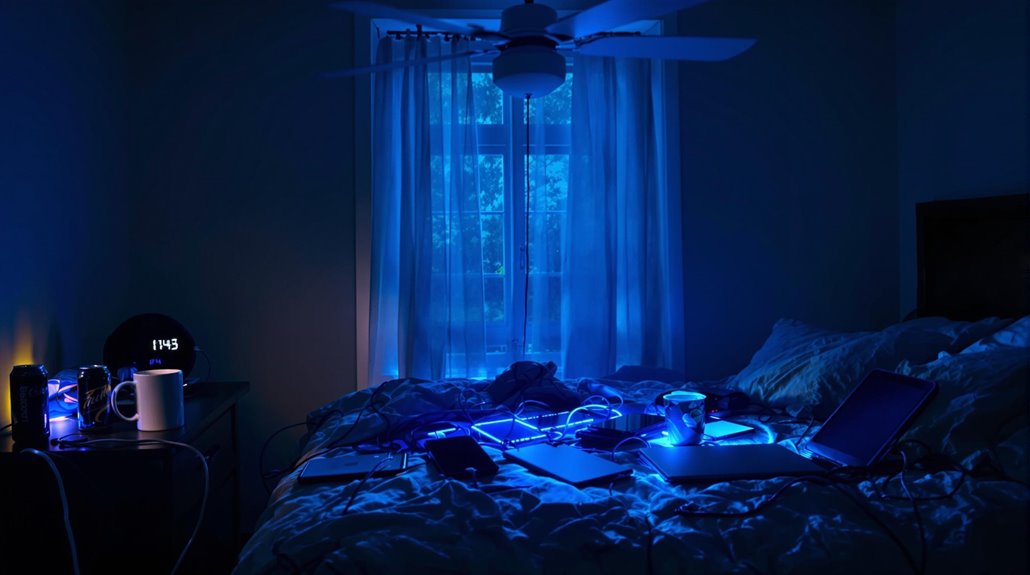
Several environmental factors in your bedroom can drastically impact the quality of your sleep, often without you realizing it. Sleep experts emphasize that exposure to bright lights, particularly from electronic devices, can suppress your body's natural melatonin production, making it harder to fall asleep naturally. If you're struggling with sleep, it's a good idea to create an environment that promotes rest and relaxation.
Your bedroom's physical conditions play an essential role in sleep quality. Excessive noise, uncomfortable temperatures, and poor air circulation can prevent you from getting the restorative sleep you need. The clutter in your room isn't just an eyesore - it's actually interfering with your brain's ability to associate your bedroom with sleep and relaxation. When you use your bedroom for work, entertainment, or other activities, you're weakening this important mental connection.
Your bed itself might be sabotaging your sleep. An uncomfortable mattress, worn-out pillows, or unsuitable bedding can lead to physical discomfort and frequent night wakings. Maintaining a consistent sleep schedule and creating a favorable sleep environment will help regulate your body's natural sleep-wake cycle.
Nighttime Exercise Habits
While creating an ideal sleep environment is key, your exercise timing can dramatically impact your sleep quality. If you're exercising vigorously right before bedtime, you're setting yourself up for a restless night. High-intensity workouts elevate your body temperature, heart rate, and blood pressure, making it nearly impossible to achieve the relaxed state needed for quality sleep. Poor sleep patterns can increase your risk of developing conditions like sleep apnea and type 2 diabetes, making it indispensable to establish proper exercise timing.
To maintain healthy sleep patterns while staying active, follow these essential guidelines:
- Schedule vigorous workouts at least 3-4 hours before bedtime to allow your body adequate time to cool down
- Replace evening high-intensity exercises with gentle stretching or yoga if you must move at night
- Maintain a consistent daily exercise routine to regulate your body's natural sleep-wake cycle
- Create a calming pre-bed routine that helps shift from exercise to rest
Stress Management Issues

When stress builds up in your daily life, it can wreak havoc on your sleep quality and overall well-being. Whether you're dealing with work pressure, family responsibilities, or health concerns, unmanaged stress can quickly turn occasional sleepless nights into a persistent problem. If you're not addressing these stressors effectively, you're likely to find yourself caught in a cycle of poor sleep and increasing anxiety.
Your inability to handle stress properly before bedtime can lead to more serious sleep disorders and may even trigger underlying conditions like depression. If you're constantly worrying about your inability to sleep or letting daily tensions follow you to bed, you're creating additional barriers to quality rest. Without proper stress management techniques and a calming pre-bed routine, you'll continue to struggle with falling and staying asleep. Don't hesitate to seek professional medical advice if you're experiencing ongoing sleep difficulties related to stress. A healthcare provider can help you develop effective strategies to manage your stress levels and improve your sleep patterns before they develop into chronic issues that are harder to resolve.
Poor Sleep Hygiene Practices
Poor sleep hygiene habits can quickly derail your chances of getting quality rest each night. When you're not getting enough sleep, it can affect everything from your blood pressure to your daily performance. Your bedroom should be a sanctuary dedicated solely to sleep, yet many common practices can interfere with your body's natural sleep mechanisms.
- If you're scrolling through your phone or watching TV before bed, you're suppressing your body's melatonin production, making it much harder to drift off naturally.
- Late-night snacks, coffee, or alcoholic beverages might seem harmless, but they're disrupting your sleep cycles and preventing deep, restorative rest.
- When you don't stick to consistent bedtimes and wake-up times, you're throwing off your body's internal clock, making it harder to establish healthy sleep patterns.
- Using your bedroom as a home office or entertainment space sends mixed signals to your brain about the room's purpose.
Creating proper sleep hygiene habits isn't complicated, but it requires commitment. You'll need to convert your bedroom into a calm, clutter-free environment and establish routines that support your body's natural sleep-wake cycle.